Latest News

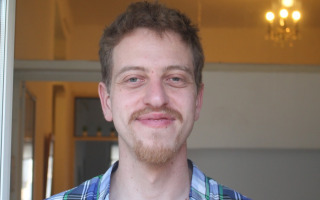
matan rubin

Comparing the value of perceived humanversus AI-generated empathy

16 July, 2025

new paper published in Nature Human Behaviour by Matan Rubin, Prof. Anat Perry, and colleagues, explores whether empathic responses are perceived differently when attributed to a human versus artificial intelligence.

Across nine studies with over 6,000 participants, the researchers found that identically generated empathic messages were rated as more empathic, supportive, and authentic when thought to come from a human.
oded leshem

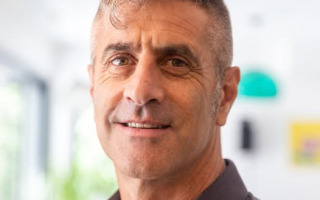
Congratulation to Dr. Oded Adomi Leshem

2 July, 2025

Who won ISPP’s 2025 David O. Sears Best Book Award for his book "Hope Amidst Conflict: Philosophical and Psychological Explorations," Published by Oxford University Press.

Leshem is a senior researcher at the PICR lab and the founder of the new International Hub for Hope Research.

David O. Sears Best Book on Mass Politics Award

Amir Tal

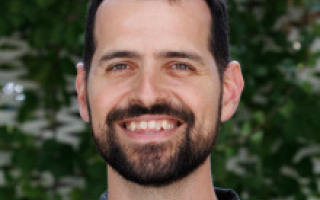
Welcome Dr. Amir Tal

24 June, 2025

The Department of Psychology is excited to welcome Dr. Amir Tal, a new faculty member joining the department in collaboration with the Department of Cognitive Science and the Brain. Amir will join us in the upcoming academic year (2025–2026) and will lead the Computational Psychology cluster.

More

Filter News by Month

In the Press

A new model of insight and a systematic review of measures

A new model of insight and a systematic review of measures

3 October, 2021

There is substantial research examining insight in psychotic disorders and in some nonpsychotic disorders. However, there has been little attention given to many nonpsychotic disorders. Research on insight in psychosis distinguishes between cognitive and clinical insight. In most studies examining insight in nonpsychotic disorders, definitions and assessments of insight vary significantly. The purpose of this review is to suggest a definition of insight in nonpsychotic disorders such that it can be used across different disorders.

Disengaging punishment avoidance is difficult for humans

Disengaging punishment avoidance is difficult for humans

12 September, 2021

It is known that compulsivity is linked to a problem in planning based on a cognitive map of the environment, which is necessary for predicting the consequences of our actions. Paul Sharp, from Dr. Eran Eldar’s lab, found that this problem is associated with a more fundamental impairment in learning the structure of cognitive maps. Paul demonstrated this impairment in three different experiments in collaboration with researchers from University College London.

The links between an individual's personal "biological clock", levels of alertness, and OCD symptoms

The links between an individual's personal "biological clock", levels of alertness, and OCD symptoms

25 August, 2021

Congratulations to the PhD candidate Hadar Naftalovich and Prof. Eyal Kalanthroff, who were awarded the International Obsessive-Compulsive Foundation's Michael Jenike Young Investigator Award along with collaborators Dr. Alex Gileles-Hillel, from Hadassah Medical School, Dr. Helen Blair Simpson, from Columbia University, and Drs. Hagai Bergman, from the Hebrew University of Jerusalem.

Rumination is associated with a narrow temporal attentional scope

Rumination is associated with a narrow temporal attentional scope

15 August, 2021

Rumination about negative experiences is widely viewed as a transdiagnostic process underlying various forms of psychopathology that involve emotion dysregulation. Cognitive models highlight the role of attentional control and emotional biases in the development and maintenance of rumination. We suggest that the temporality of the attentional blink paradigm may make it especially relevant for studying rumination-related biases and designing bias modification interventions for rumination.

I Still Haven't Found What I'm Looking For

I Still Haven't Found What I'm Looking For

8 August, 2021

Searching for something, whether it is your keys or a familiar face, is a frequent everyday activity. Under some circumstances, such as in security settings, it even carries life-saving implications. Until now, it was widely believed that in order to find what they are looking for, people need to know at least some aspects of what they are trying to find. However, this assumption is inconsistent with common human experiences, such as suddenly finding a friend in a crowd although there was no prior expectation of seeing them.